Register for the PAL Method Composer Webinar Series
Story
Automation
4 min 03.19.2026

Join the PAL Method Composer Webinar Series

Your expertise is in chemistry, not coding. Why let a scripting barrier limit your laboratory's potential? Discover how the PAL Method Composer (PMC) 2.0 shifts the focus back to the science by replacing rigid proprietary scripts with an intuitive, visual workflow. Join our Product Manager for Software, Benedikt Spielmann, and guest experts for this webinar series on mastering your automated sample preparation.


Introduction

In the analytical lab, we often find ourselves at a digital standstill. While modern mass spectrometers can detect analytes at parts-per-trillion, the "front-end" sample preparation remains the most significant source of variance. Historically, if you wanted to adapt an automated PAL method, you needed to be an expert in proprietary coding—or wait for one to help you.

The data is clear: 60–70% of laboratory errors occur during the pre-analytical phase. We believe the solution isn't more code; it’s better accessibility. In this webinar series, we are getting practical. We will show you how the PAL Method Composer 2.0 allows you to create and run complex methods in minutes using a visual interface. No programming skills are required—just your expertise in chemistry.

Gegner Hagen
Hagen Gegner

Scientific Communications Specialist

Visit Bio

Get an overview of the new interface and functionalities of the PAL Method Composer

Webinar "Breaking the Scripting Barrier"

Host: Benedikt & Hagen

Date: Wed, May 13, 4:30 PM - 5:00 PM GMT+2

We start with a simple premise: Why settle for static scripts when you can build dynamic methods?

Our product manager for software, Benedikt, demonstrates how we are making lab automation accessible to everyone, regardless of their coding background. Instead of writing lines of proprietary code, you can now build your methods visually. We are moving to a system where you simply drag and drop Worksteps to create a sequence. By using smart defaults, the software gives you a head start on common parameters, but you always retain the flexibility to adapt them to your specific chemistry.

Topics

  • Learn how to create robust methods in minutes by simply dragging and dropping Worksteps to build a logical sequence.
  • Explore with Benedikt what is new in the PAL Method Composer 2.0
  • Meet the interactive PAL AI, designed to provide real-time expertise during method setup.
  • Discover the possibilities of a cloud-based application


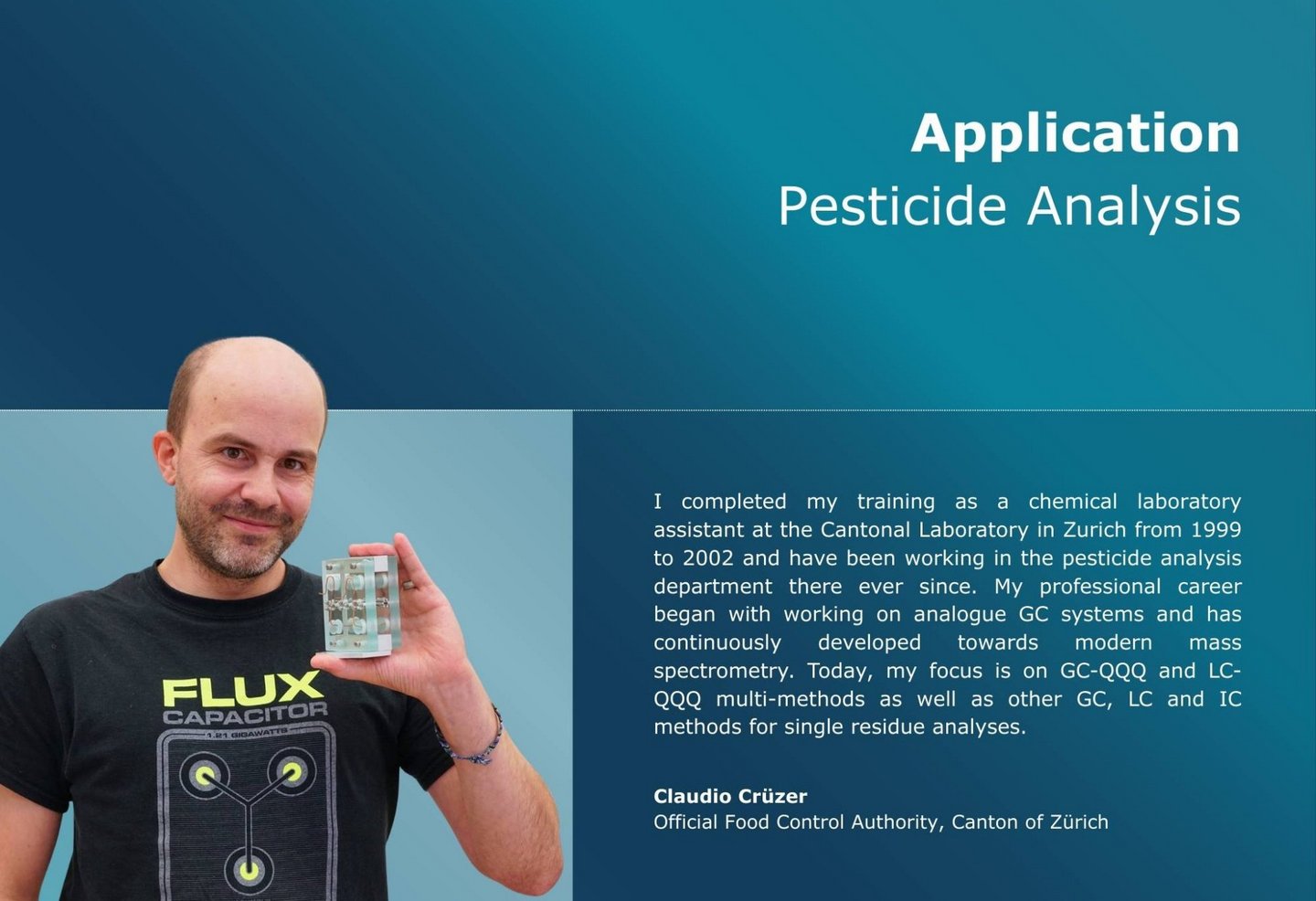
I completed my training as a chemical laboratory assistant at the Cantonal Laboratory in Zurich from 1999 to 2002 and have been working in the pesticide analysis department there ever since. My professional career began with working on analogue GC systems and has continuously developed towards modern mass spectrometry. Today, my focus is on GC-QQQ and LC-QQQ multi-methods as well as other GC, LC and IC methods for single residue analyses.

Webinar "The Lab View: Routine Pesticide Automation"

Host: Claudio Crüzer

Date: Tue, May 19, 4:30 PM - 5:00 PM GMT+2

Automation is only valuable if it produces better data. We are pleased to welcome Claudio Crüzer from the Cantonal Laboratory Zürich, Official Food Control Authority, Department Pesticide Analysis, Zurich, Switzerland. In this session, Claudio shares the laboratory's journey in moving from labor-intensive manual dispersive SPE (dSPE) to a high-throughput, automated micro-SPE system. Using the PAL Method Composer, the Zürich team developed a generic cleanup procedure that handles a wide range of food commodities, from high-fat to high-pigment samples, without requiring custom sorbent modifications.

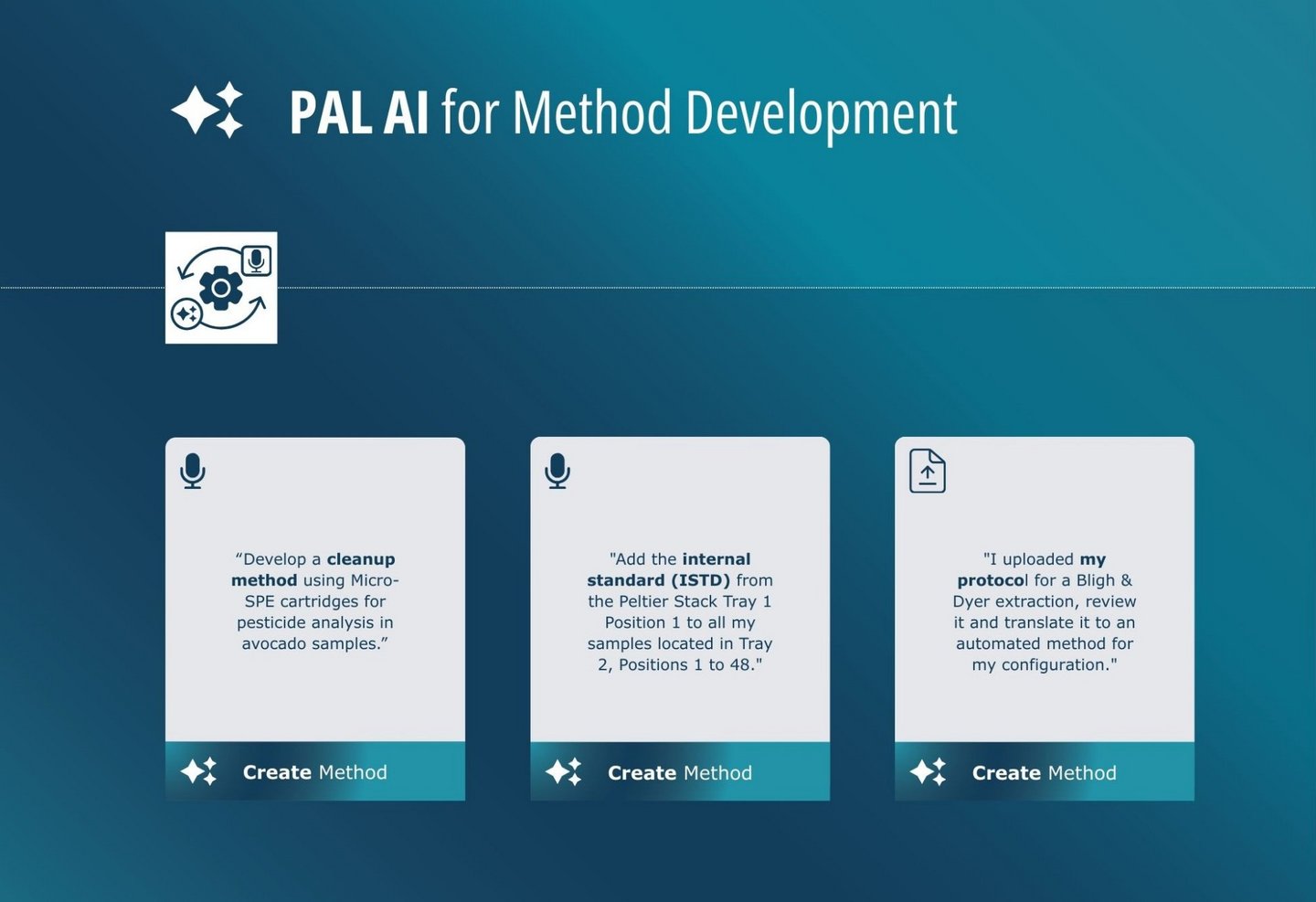
An interface with prompts for workflow creation using the PAL AI.

Webinar "The Horizon – AI and the Road to 2027"

Hosts: Hagen & Benedikt

Date: Wed, May 20, 4:30 PM - 5:00 PM GMT+2

While the PMC 1.6 is our current workhorse, we are entering a new phase of autonomous laboratory support. Join Benedikt and Hagen in this forward-facing webinar.

Features of PAL AI (coming soon) A preview of our help agent designed to assist with method creation and troubleshooting.

  • Convert PDF methods directly into executable Worksteps.

  • Visualize your setup in 3D to use precise runtime calculations to perfectly align your sample prep.

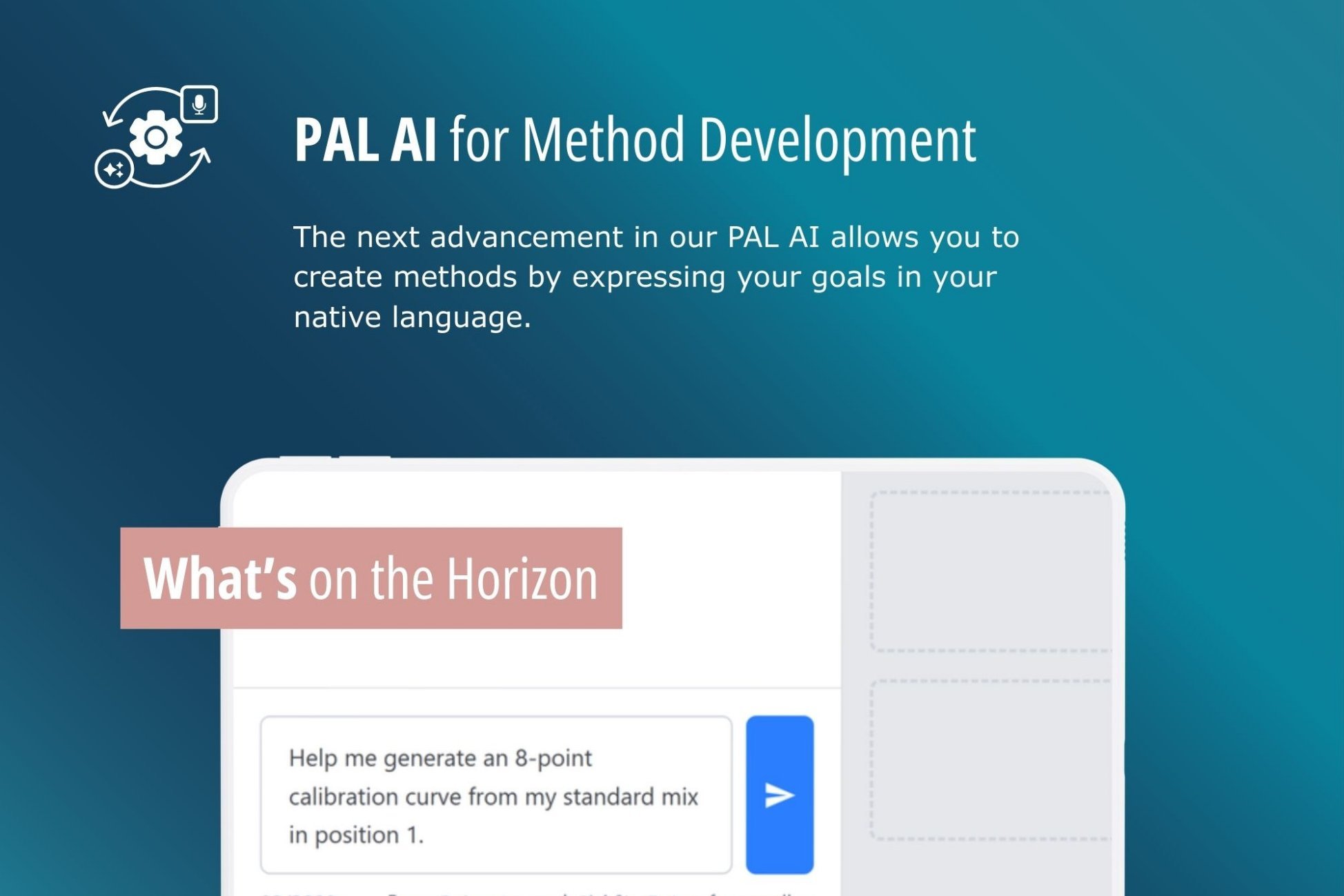
  • Use natural language prompts for method setup.

  • Explore the next-generation web and desktop interface.

What to Expect: Theory, Practice, and Performance

This series is a comprehensive blend of live software demonstrations and real-world laboratory applications. Whether you are managing complex metabolomics platforms or routine environmental screening, you will gain actionable insights to apply to your PAL System immediately.

Note: We understand global schedules vary. All registered participants will receive full recordings and follow-up materials to watch at their own pace.


Would you like to try out the current version of the PAL Method Composer?

A screenshot of the new interface with upcoming highlights such as PAL AI for Method Development
Connect with us and try out PAL AI.

Related Content

How to use PAL Method Composer

PAL Method Composer
Brochures

PAL Method Composer

Methods in minutes

PAL Method Composer Webinar
Webinars

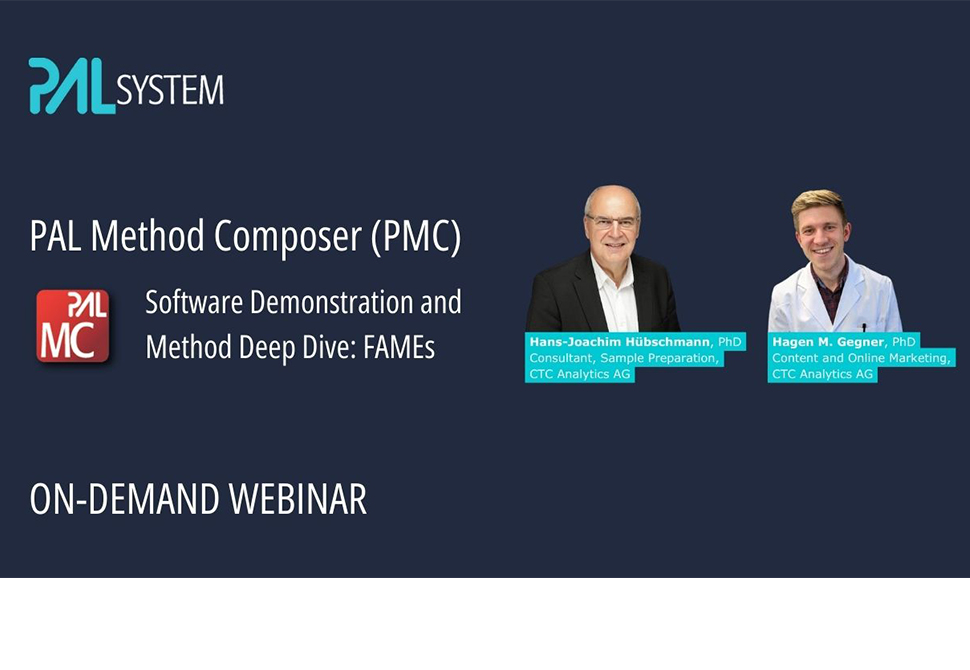
PAL Method Composer - Software Demonstration and Method Deep Dive into FAMEs

Would you like to automate your sample preparation workflow or injection (LC or GC)?

PFAS Webinar
Webinars
Advancing PFAS Analysis - Robotic Automation and Streamlined LC/MS Workflows

Advancing PFAS Analysis - Robotic Automation and Streamlined LC/MS Workflows

To support the scientific community and advance PFAS analysis we are proud to offer a webinar on this topic.

Key topics:

  • PFAS Fundamentals: Learn about the chemistry and significance of PFAS compounds.
  • Sample Preparation Challenges: Understand current hurdles, regulations and best practices in PFAS extraction and purification.
  • Automated LC/MS Workflows: Get an overview on automated workflows and see how PAL System integrates with LC/MS to optimize sample preparation and injection.
  • Deep Dive: Explore online SPE for PFAS analysis.
ASMS 2025 - Streamlined Analysis of Polar and Non-Polar Metabolites in Plasma Using Automated Micro-SPE LC/MS
Posters
ASMS 2025 - Streamlined Analysis of Polar and Non-Polar Metabolites in Plasma Using Automated Micro-SPE LC/MS

ASMS 2025 - Streamlined Analysis of Polar and Non-Polar Metabolites in Plasma Using Automated Micro-SPE LC/MS

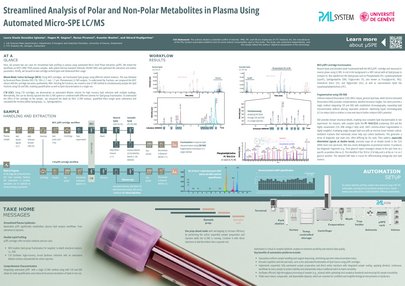
This poster presents two use cases for streamlined lipid profiling in plasma using automated Micro Solid Phase Extraction (μSPE). Where the workflows on NIST (SRM 1950) plasma samples was tested, with spiked internal standard (Ultimate SPLASH ONE) and optimized the extraction and elution parameters. Briefly, it focused on two cartridge sorbent types Mixed-Mode Cation Exchange (MCX) and C18 (CEC) and showcased their usage.

Automated SPME: Extraction and Method Development Options with the PAL RTC and RSI
Application Notes
Automated SPME: Extraction and Method Development Options with the PAL RTC and RSI

Automated SPME: Extraction and Method Development Options with the PAL RTC and RSI

This application note highlights the versatility of the PAL System platform for performing different SPME experiments

Contact LinkedIn