Story
Environmental
9 min 04.09.2026

Global Proliferation of Emerging Contaminants Demands a Shift in Laboratory Strategy

Reflecting on discussions at analytica 2026, we explore the evolving landscape of emerging contaminants—from "forever chemicals" to liquid crystal monomers—and how automated sample preparation is becoming the critical link in turning trace detection into reliable data across environmental, food, and clinical fields.

Gegner Hagen
Hagen Gegner

Scientific Communications Specialist

Visit Bio

During analytica 2026, a recurring theme emerged in our conversations with laboratory managers and researchers: the "analytical treadmill" of emerging contaminants (ECs). As detection limits drop, the list of regulated and suspected substances grows exponentially. While High-Resolution Mass Spectrometry (HRMS) has unlocked our ability to see these compounds, the challenge remains grounded in the pre-analytical phase. How do we ensure that our sample preparation is as precise, flexible, and robust as our detectors?

Global Research Mapping Visualizes a Chemical Landscape without Analytical Silos

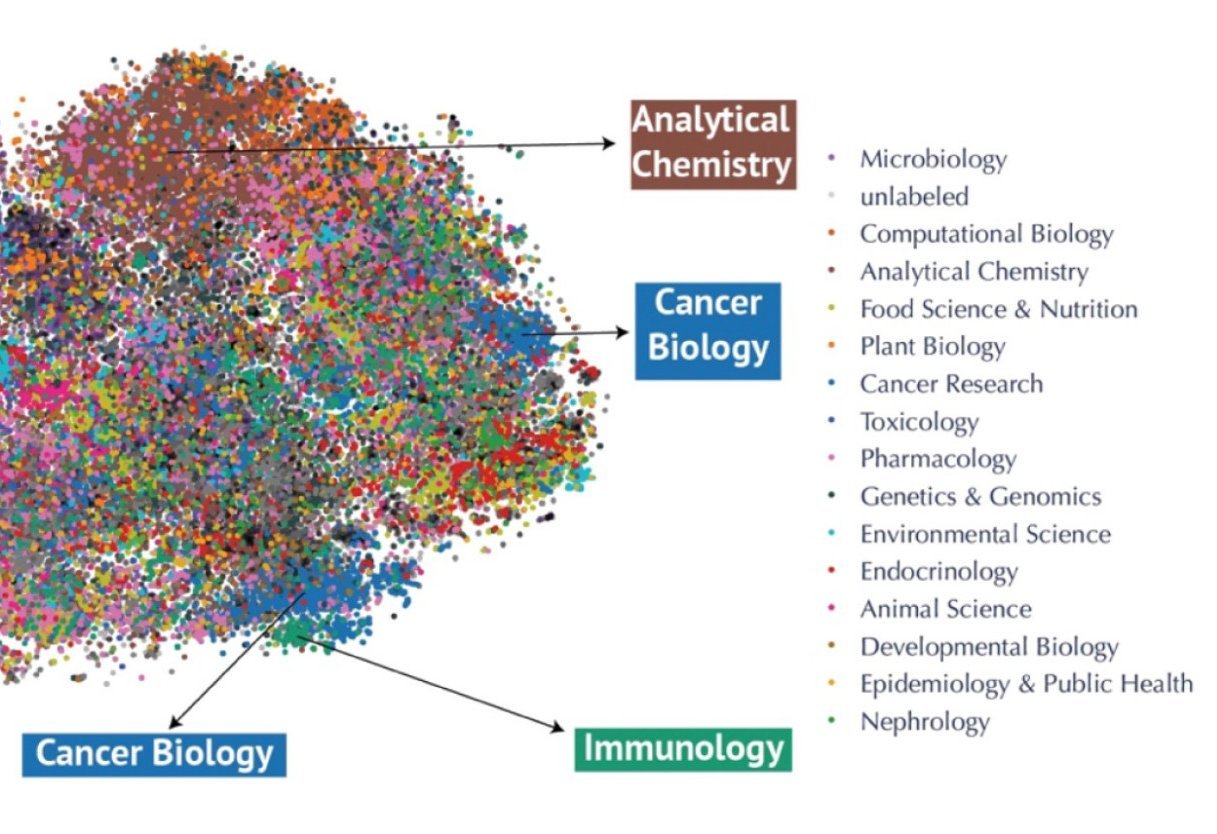
By synthesizing over 26,000 research abstracts through LLM-powered computational mapping, we can now visualize how thousands of new compounds intersect across previously isolated scientific fields.

Navigating the sheer volume of literature surrounding emerging contaminants is no longer possible through manual review alone. To provide a comprehensive overview, we utilized an LLM-powered research map that synthesized data from 26,138 scientific abstracts (Bifarin et al., 2025). This bird's-eye view identifies core trends and clusters across clinical, food, and environmental sciences, illustrating that contaminants are no longer confined to specific "silos."

The proliferation is staggering, with thousands of new compounds introduced annually, many lacking standardized protocols and workflows (Meher & Zarouri, 2025).

The Proliferation of New Chemical Classes is Reshaping Safety Standards

Diverse classes of contaminants - from persistent industrial chemicals to biologically active pharmaceuticals - require a multi-matrix approach to monitoring and risk assessment.

The current landscape of emerging contaminants (ECs) encompasses a heterogeneous group of synthetic or naturally occurring chemicals that are not commonly monitored.


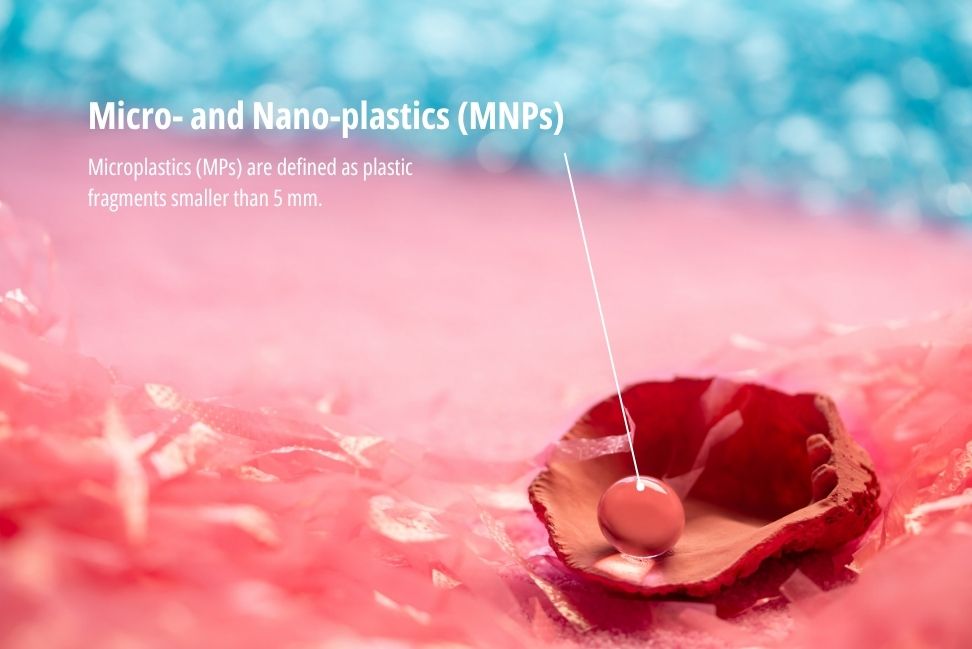
Micro- and Nano-plastics (MNPs) - These plastic fragments (smaller than 5 mm for micro and 1-1000 nm for nano) originate from primary sources like the cosmetic and fishing industries, or secondary fragmentation via UV radiation and mechanical abrasion. Recent studies show they bioaccumulate in the food chain and can penetrate biological tissues, potentially inducing oxidative damage and lung inflammation (Wu et al., 2023; Boahen et al., 2025).

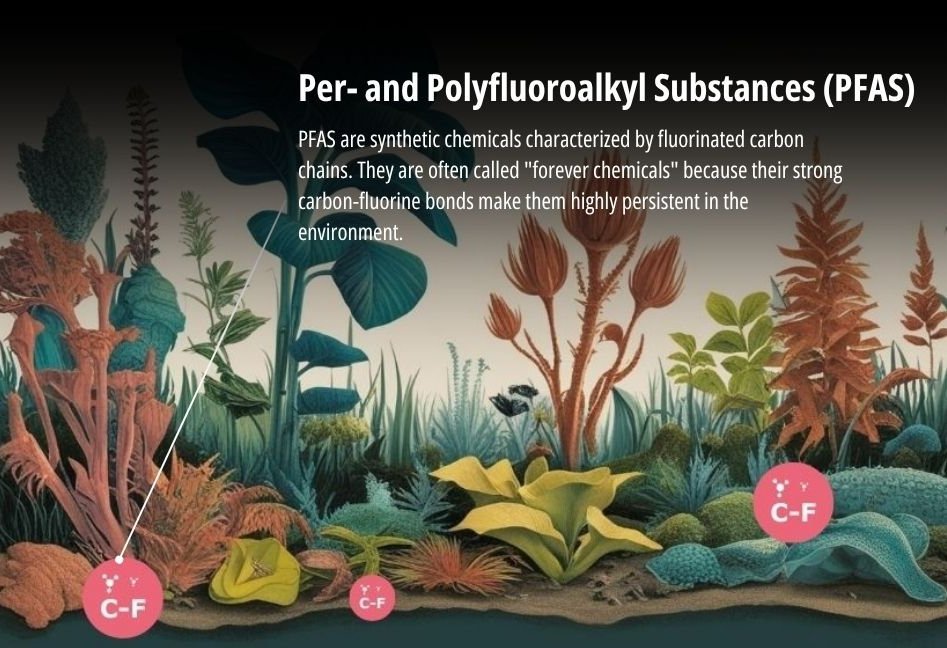
Per- and Polyfluoroalkyl Substances (PFAS) - Often called "forever chemicals" due to their persistent carbon-fluorine bonds, these synthetic chemicals are used in non-stick cookware, waterproof clothing, and food packaging. They are widely detected in soil, water, air, and human blood, with exposure linked to immunotoxicity, liver damage, and certain cancers (Boahen et al., 2025).

Pharmaceuticals and Personal Care Products (PPCPs) - This diverse collection includes antibiotics, antidepressants, hormones, and cosmetics. Because they are generally polar and biologically active, they often bypass traditional wastewater treatment plants (WWTPs), ultimately entering rivers and oceans where they disrupt biodiversity and ecological balance (Boahen et al., 2025; Mohapatra et al., 2025).

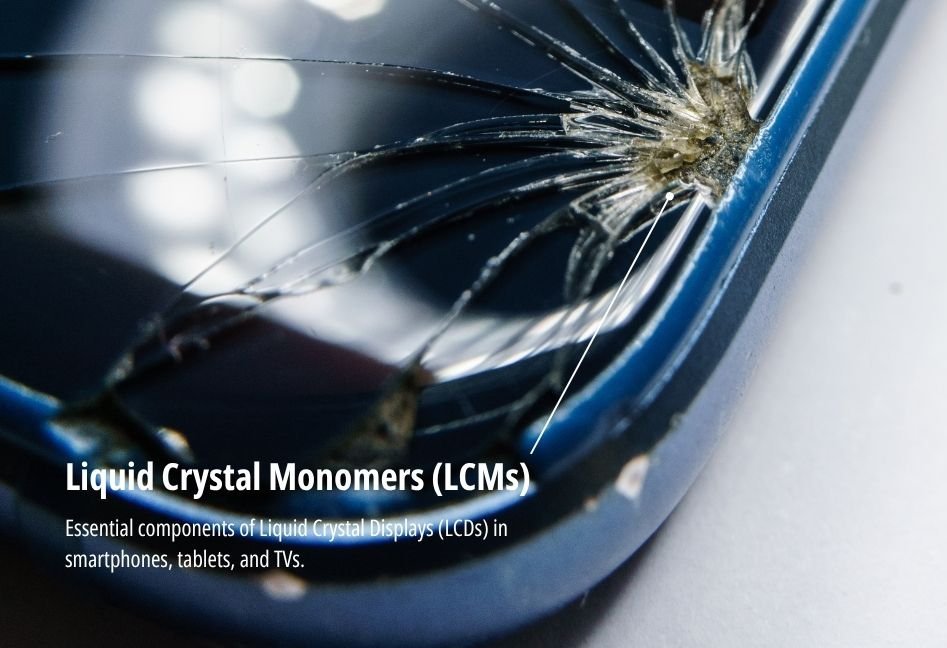
Liquid Crystal Monomers (LCMs) are essential components of Liquid Crystal Displays (LCDs) in smartphones, tablets, and TVs.

Liquid Crystal Monomers Represent a New Generation of Persistent and Potential Threats

Widely used in display devices, LCMs have emerged as a class of persistent, bioaccumulative, and toxic (PBT) compounds that persist even through advanced wastewater treatment.

Liquid Crystal Monomers (LCMs) are essential components of Liquid Crystal Displays (LCDs) in smartphones, tablets, and TVs, typically featuring rigid cores like biphenyl or terphenyl with terminal groups such as fluorine or cyano moieties (Stadelmann et al., 2024; Li et al., 2018). Due to the rapid turnover of electronic devices, LCMs are increasingly released into the environment through e-waste mismanagement and industrial discharge (Li et al., 2018; Mohapatra et al., 2025).

The environmental fate of LCMs is concerning due to their high lipophilicity (log Kow ranging from 3.2 to 12.7) and extreme persistence, leading to their detection in indoor dust, aquatic sediments, and even human serum (Stadelmann et al., 2024; Su et al., 2022). Recent studies highlight their role as potential endocrine disruptors, with specific monomers identified as PPARgamma (Peroxisome Proliferator-Activated Receptor gamma) antagonists (Zhao et al., 2023; Stadelmann et al., 2024). PPARgamma is a nuclear receptor and "master regulator" of fatty acid storage and glucose metabolism; by acting as antagonists, these contaminants bind to the receptor and inhibit its natural function, leading to systemic metabolic imbalances and developmental toxicity that extend the scope of endocrine disruption beyond reproductive health.

In Wastewater Treatment Plants (WWTPs), conventional processes achieve only moderate removal efficiencies (approx. 84%) for LCMs, but F-LCMs frequently persist through standard secondary treatment (Mohapatra et al., 2025). Advanced oxidation techniques are being explored to target these molecules, yet F-LCMs remain a significant analytical and remediation challenge (Mohapatra et al., 2025).

Advanced Analytical Discovery is Replacing Static Targeted Screening

The shift toward High-Resolution Mass Spectrometry and Non-Targeted Analysis allows laboratories to identify "invisible" transformation products and novel industrial pollutants.

Traditional analytical methods like Gas Chromatography (GC) and Liquid Chromatography (LC) coupled with Mass Spectrometry (MS) remain the workhorses for EC identification (Meher & Zarouri, 2025). However, the field is evolving toward more sophisticated discovery-driven workflows.


Targeted and Non-Targeted Analysis

While traditional methods focus on known pollutants, High-Resolution Mass Spectrometry (HRMS) and Non-Targeted Analysis (NTA) enable the identification of previously undetected contaminants and their transformation products (Schymanski et al., 2015; Meher & Zarouri, 2025).

LC-MS/MS and GC-MS/MS

High-resolution tandem techniques have become central to identifying non-volatile or thermally unstable compounds like pharmaceuticals and persistent organic pollutants (Boahen et al., 2025; Meher & Zarouri, 2025). For LCMs, GC-MS is the primary tool for fluorinated and cyano-based structures, though LC-MS is increasingly necessary for the more polar or thermally labile variants (Stadelmann et al., 2024; Li et al., 2018).

Imaging and Element Analysis

Specialized MS methods like MALDI-TOF and ToF-SIMS are being explored for the multimodal analysis and imaging of nanoplastics in food matrices (Wu et al., 2023), while Atomic Absorption Spectroscopy (AAS) traces heavy metal bioaccumulation in clinical and biological tissues (Owusu-Boateng et al., 2022).

Matrix-Specific Sample Preparation is the Foundation of Trace Detection

The challenge of detecting contaminants at low nanogram-per-liter levels necessitates sophisticated enrichment and clean-up strategies tailored to the complexity of the sample.

Because emerging contaminants occur at trace levels in highly complex matrices, sample preparation must both enrich the analytes and remove significant interferences (Meher & Zarouri, 2025).


Aqueous Samples

Solid-phase extraction (SPE) is the dominant approach for natural water and wastewater, often utilizing multiresidue formats with sorbent mixes tailored to broad polarity ranges (Câmara et al., 2022; Meher & Zarouri, 2025).

Solid and Biota Matrices

For soil, sediment, and biota, techniques like Pressurized Liquid Extraction (PLE) and Ultrasonic-Assisted Extraction (UAE) are critical for robustly releasing lipophilic contaminants like LCMs from the matrix (Stadelmann et al., 2024; Soriano et al., 2024). The QuEChERS method is also being adapted for broader environmental contaminants in sludge and biota (Santini et al., 2024; Godfrey et al., 2022).

The Role of Automated μSPE Clean-up

Automated micro-Solid Phase Extraction (μSPE) provides a cleaner extract than traditional dispersive SPE (d-SPE). This step significantly increases instrument up-time by preventing MS source contamination and reducing matrix effects (Lehotay et al., 2016; Santini et al., 2024).

These plastic fragments (smaller than 5 mm for micro and 1-1000 nm for nano) originate from primary sources like the cosmetic and fishing industries, or secondary fragmentation via UV radiation and mechanical abrasion

Moving from Discovery-Driven Research to Standardized Regulatory Vigilance

While hybrid workflows and NTA provide unprecedented depth, the transition to routine surveillance hinges on standardizing the pre-analytical chain to eliminate "technical noise."

The environmental fate of many emerging contaminants remains unclear due to the complex interplay of chemical transport and degradation mechanisms. A critical hurdle is the "regulatory lag"—the time required for environmental legislation to adapt to our advancing scientific understanding (Boahen et al., 2025). This lag represents a significant barrier to managing emerging threats, as persistent substances like PFAS and LCMs may continue to accumulate while comprehensive long-term studies remain rare (Boahen et al., 2025; Stadelmann et al., 2024).

To address these gaps, the analytical landscape is shifting toward hybrid methods that combine targeted quantification with Non-Targeted Analysis (NTA). This "dual-track" approach offers the quantitative certainty of established pollutants alongside the discovery potential of suspect screening for unknown transformation products (Meher & Zarouri, 2025; Schymanski et al., 2015). However, a purely discovery-driven approach faces a data processing bottleneck; interpreting thousands of low-level signals requires moving beyond binary reporting toward a nuanced assessment of bioaccumulation and chronic toxicity (Boahen et al., 2025; Meher & Zarouri, 2025).

The success of these complex hybrid workflows depends entirely on overcoming "technical noise"—the variability introduced during the pre-analytical phase (Meher & Zarouri, 2025; Boahen et al., 2025). Without rigorous standardization of automated sample handling, operator-induced variability can mask the very trace-level signals critical for discovery (Meher & Zarouri, 2025). By standardizing the pre-analytical chain through automated "micromethods" and high-precision modular robotic liquid handling, laboratories can eliminate these "known unknowns." This shift is the only way to generate the robust, reproducible data necessary for the next generation of global regulatory safety standards, turning environmental discovery into actionable public health protection.

References

Bifarin, O. O., Yelluru, V. S., Simhadri, A., & Fernández, F. M. (2025). A Large Language Model-Powered Map of Metabolomics Research. Analytical Chemistry, 97, 14088-14096.

Boahen, E., Owusu, L., & Adjei-Anim, S. O. (2025). A comprehensive review of emerging environmental contaminants of global concern. Discover Environment, 1:48.

Li, J., Su, G., Letcher, R. J., Xu, W., Yang, M., & Zhang, Y. (2018). Liquid Crystal Monomers (LCMs): A New Generation of Persistent Bioaccumulative and Toxic (PBT) Compounds? Environmental Science & Technology, 52, 5005-5006.

Meher, A. K., & Zarouri, A. (2025). Environmental Applications of Mass Spectrometry for Emerging Contaminants. Molecules, 30(2), 364.

Mohapatra, S., Jong, M. C., Mukherji, S., van Lier, J. B., & Spanjers, H. (2025). Liquid Crystal Monomers (LCMs) of Emerging Concern: Recent Progress and Challenges in Wastewater Treatment. Current Pollution Reports, 11:48.

Stadelmann, B., Leonards, P. E. G., & Brandsma, S. H. (2024). A new class of contaminants of concern? A comprehensive review of liquid crystal monomers. Science of the Total Environment, 947, 174443.

Su, H., Ren, K., Li, R., Li, J., Gao, Z., Hu, G., Fu, P., & Su, G. (2022). Suspect Screening of Liquid Crystal Monomers (LCMs) in Sediment Using an Established Database Covering 1173 LCMs. Environmental Science & Technology, 56.

Wu, P., Wu, X., Huang, Q., Yu, Q., Jin, H., & Zhu, M. (2023). Mass spectrometry-based multimodal approaches for the identification and quantification analysis of microplastics in food matrix. Frontiers in Nutrition, 10:1163823.

Zhao, H., Li, C., Naik, M. Y., Wu, J., Cardilla, A., Liu, M., Zhao, F., et al. (2023). Liquid crystal monomer: a potential PPARgamma antagonist. Environmental Science & Technology.


Technical References

Câmara, J. S., Perestrelo, R., Berenguer, C. V., Andrade, C. F. P., & Gomes, T. M. (2022). Green Extraction Techniques as Advanced Tools for Analysis of Contaminants in Environmental Matrices. Molecules.

Schymanski, E. L., Singer, H. P., Slobodnik, J., Ipolyi, I. M., Oswald, P., Krauss, M., Schulze, T., Haglund, P., Letzel, T., & Grosse, S. (2015). Non-target screening with high-resolution mass spectrometry: critical review using a collaborative trial on water analysis. Analytical and Bioanalytical Chemistry, 407(21), 6237–6255.

Lehotay, S. J., Han, L., & Sapozhnikova, Y. (2016). Automated $\mu$SPE cleanup for GC-MS and LC-MS analysis of pesticides and environmental contaminants in QuEChERS extracts of foods. Chromatographia.

Santini, S., Baini, M., Martellini, T., Bissoli, M., Galli, M., Concato, M., Fossi, M., & Cincinelli, A. (2024). Novel ultrasound assisted extraction and d-SPE clean-up for the analysis of multiple legacy and emerging organic contaminants in edible fish. Food Chemistry, 443, 138582.

Sanusi, I., Olutona, G., Wawata, I., & Onohuean, H. (2023). Occurrence, environmental impact and fate of pharmaceuticals in groundwater and surface water: a critical review. Environmental Science and Pollution Research, 30, 90595-90614.

Soriano, Y., Andreu, V., & Picó, Y. (2024). Pressurized liquid extraction of organic contaminants in environmental and food samples. TrAC Trends in Analytical Chemistry


Methodology Note

Parts of this Newsroom Article were powered by a literature search using Consensus. It is an AI-powered search engine that extracts and synthesizes findings directly from over 200 million peer-reviewed papers. The system utilizes Large Language Models (LLMs) to scan scientific literature for specific queries, prioritizing high-impact journals and recent data to provide a cross-disciplinary "consensus" of the current state of research. This allows for the rapid identification of analytical trends and sample preparation standards that might otherwise be obscured by the sheer volume of emerging literature.

Related Content

Tackling Forever Chemicals
Application Notes
Tackling Forever Chemicals

Tackling Forever Chemicals

A Fully Automated Workflow for High-Throughput Analysis of Volatile PFAS in Food Contact Materials.

PFAS in Cosmetics -A Comparative Analysis of Sample Preparation Techniques for PFAS Analysis
Application Notes
PFAS in Cosmetics -A Comparative Analysis of Sample Preparation Techniques for PFAS Analysis

PFAS in Cosmetics -A Comparative Analysis of Sample Preparation Techniques for PFAS Analysis

This application note explores a comparative study that tackles this challenge head-on by evaluating two powerful sample preparation techniques: Solid Phase Microextraction (SPME) and Micro Solid Phase Extraction (µSPE) for analyzing eight key PFAS in mascara by Liquid Chromatography with Mass Spectrometry (LC/MS). The investigation revealed that the two methods offer complementary strengths. SPME proved more sensitive for water-soluble PFAS and offered a simpler, filtration-free workflow. In contrast, automated µSPE excelled for oil-soluble PFAS but required a sample filtration step.

ASMS 2025 - Fully automated implementation of EPA Method 1633 for LC-MS/MS analysis of PFAS in environmental samples using a customized robotic autosampler
Posters
ASMS 2025 - Fully automated implementation of EPA Method 1633 for LC-MS/MS analysis of PFAS in environmental samples using a customized robotic autosampler

ASMS 2025 - Fully automated implementation of EPA Method 1633 for LC-MS/MS analysis of PFAS in environmental samples using a customized robotic autosampler

  • Widespread use and persistence of PFAS has led to ubiquitous detection in water, soil, air, and living organisms.
  • US EPA Method 1633 is intended for analysis of PFAS in aqueous, solid and tissue samples using LCMS/ MS at part-per-trillion concentrations.
  • This method involves significant sample preparation and purification steps prior to instrumental analysis, leading to bottlenecks in sample processing.
  • We have developed a fully automated, online μSPE-LC-MS/MS workflow based on a customized LC TriPlus RSH SMART Advanced system for high-throughput analysis of PFAS in environmental samples following EPA Method 1633 guidelines
ASMS 2025 - Fully Automated Sensitive Quantitation of PFAS in Seafood for Regulatory Screening Using Triple Quadrupole LC/MS
Posters
ASMS 2025 - Fully Automated Sensitive Quantitation of PFAS in Seafood for Regulatory Screening Using Triple Quadrupole LC/MS

ASMS 2025 - Fully Automated Sensitive Quantitation of PFAS in Seafood for Regulatory Screening Using Triple Quadrupole LC/MS

Detecting trace PFAS level is challenging due to complex sample preparation like QuEChERS extraction followed by SPE cleanup, and evaporation/reconstitution. The manual steps can be labor-intensive and error-prone, affecting accuracy and reliability. This study developed a fully automated workflow for PFAS quantitation in seafood – shrimp.

Webinar for high throughput automated offline uSPE cleanup of complex QuEChERS extracts in GC-based multi-residue analysisu
Webinars
High-throughput automated offline µ-SPE for cleanup of complex QuEChERS extracts in GC-based multi-residue analysis

High-throughput automated offline µ-SPE for cleanup of complex QuEChERS extracts in GC-based multi-residue analysis

Complex sample like cereals, oilseed or insects are challenging for GC MS/MS analysis and necessitate an optimized cleanup especially for removal of the fatty acids

Micromethods - Modern SPME Geometries - A Focus on Volatile PFAS Analysis
Webinars
Micromethods - Modern SPME Geometries - A Focus on Volatile PFAS Analysis

Micromethods - Modern SPME Geometries - A Focus on Volatile PFAS Analysis

If you're looking for ways to improve your analysis of complex matrices or trace contaminants, these expert-led sessions are for you

Join us for a deep dive into recent research comparing SPME Fiber and SPME Arrow for ultra-trace volatile PFAS. Learn directly from the author which geometry and extraction mode provides the best performance.


The Power of Micro Solid Phase Extraction
eBooks
The Power of Micro Solid Phase Extraction

The Power of Micro Solid Phase Extraction

This eBook explores the potential of uSPE to transform analytical workflows. It highlights the key benefits of uSPE, compares it with traditional techniques and examines its application across various industries. This resource provides a comprehensive guide for scientists and lab managers looking to optimize their sample preparation processes, achieve higher precision and embrace sustainable practices in analytical chemistry.

QuEChERS Compendium
eBooks
QuEChERS Compendium
QuEChERS Compendium

QuEChERS Compendium

Automated uSPE cleanup for GC/MS or LC/MS analysis of pesticides and environmental contaminants in QuEChERS extracts of foods

Fully Automated QuEChERS Extraction and µSPE Clean-up of Organophosphate Pesticides in Orange Juice
Publications
Fully Automated QuEChERS Extraction and µSPE Clean-up of Organophosphate Pesticides in Orange Juice

Fully Automated QuEChERS Extraction and µSPE Clean-up of Organophosphate Pesticides in Orange Juice

Chiew Mei Chong1, Hans-Joachim Hübschmann2

1 CTC Analytics Pte. Ltd., Singapore.
2 HANS Analytical Solutions, Osaka, Japan.

Contact LinkedIn