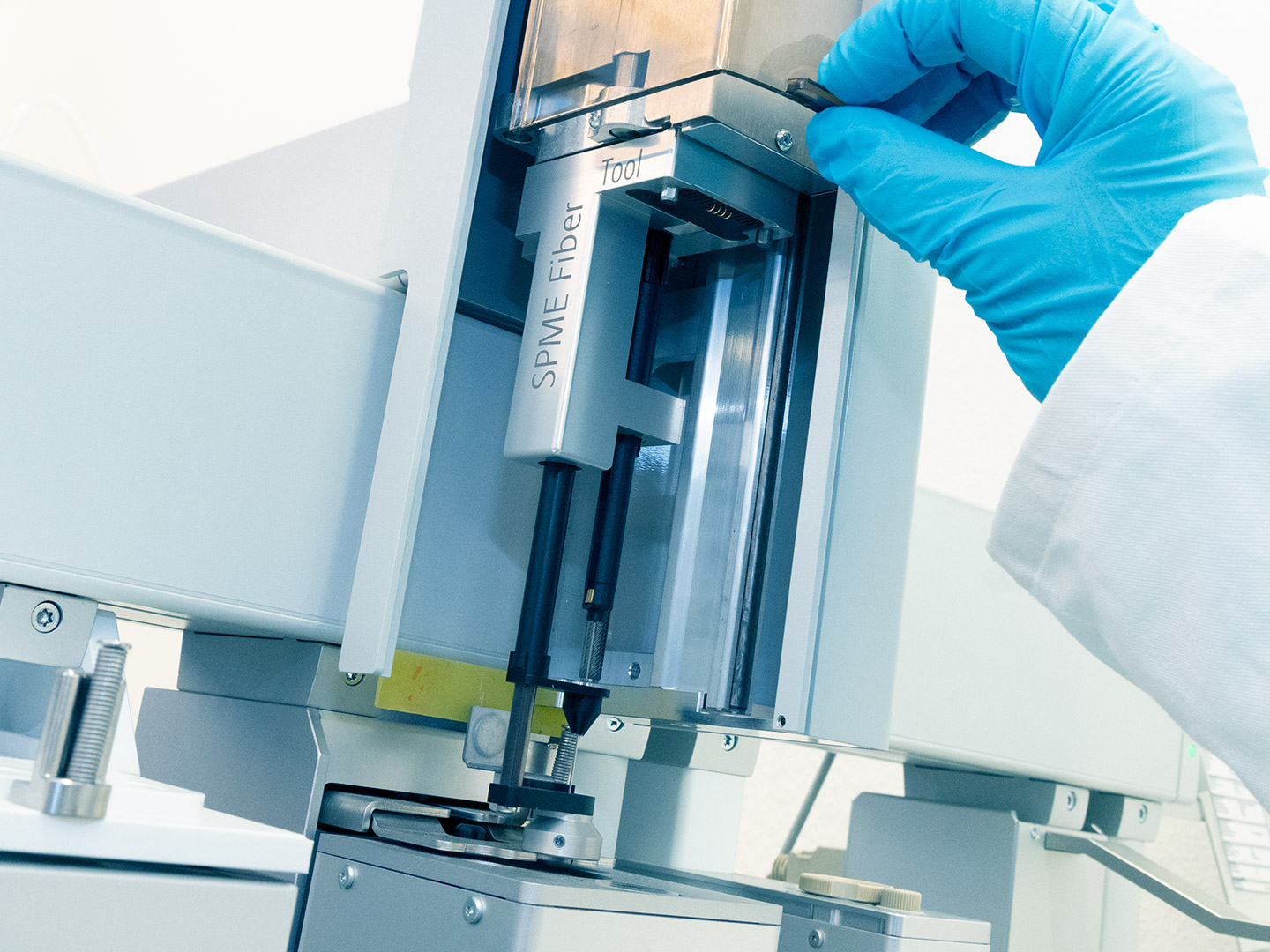
Close-up of PAL System with SPME Fiber Tool installed, showing precision components and a gloved hand performing setup.

Smart SPME Fibers for Solid Phase Micro Extraction

Smart SPME Fibers for Solid Phase Micro Extraction

Smart SPME Fibers - Excellent extraction properties

Smart SPME Fibers have been developed and optimized for automation and featuring excellent extraction properties combined with smart handling and operational safety. SPME is a true solventless and green analytical technique and a very effective way of automated sample preparation.

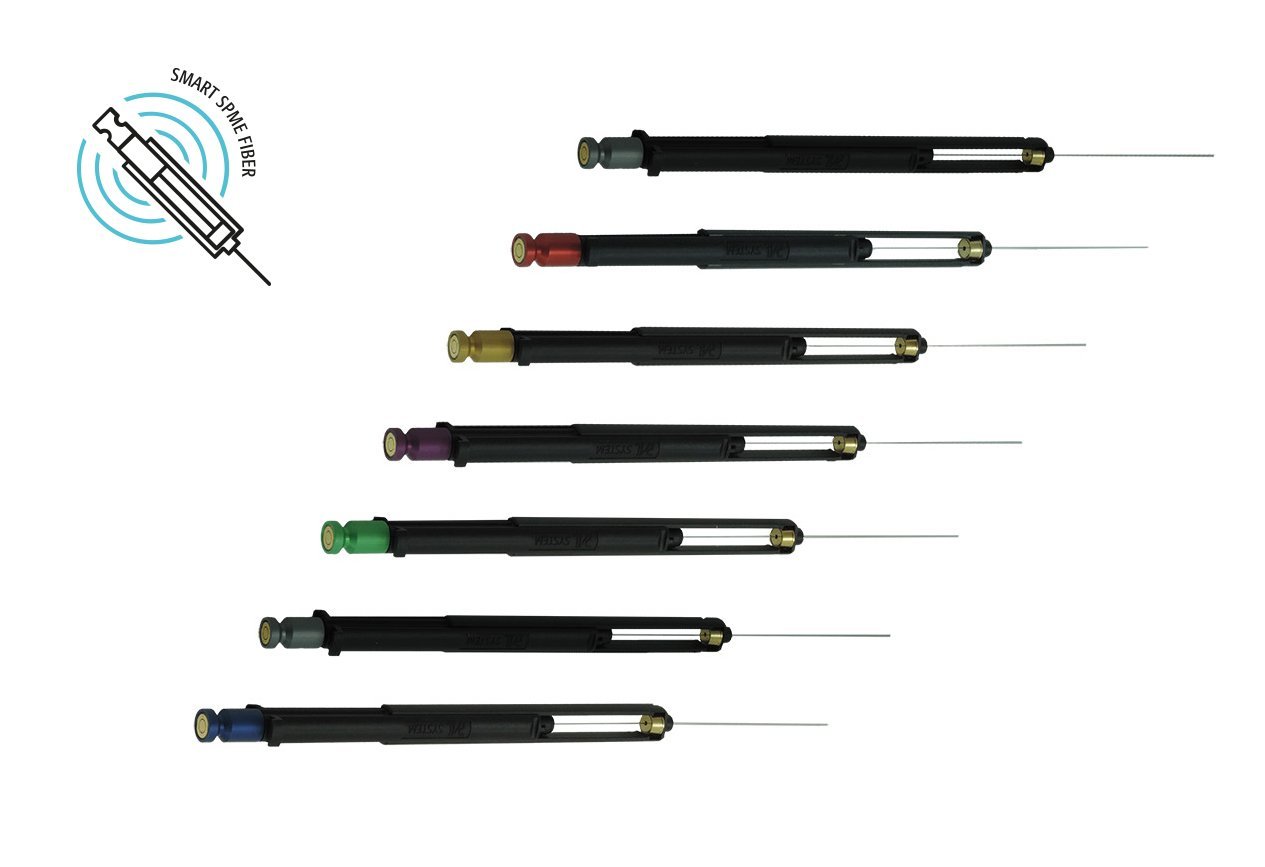
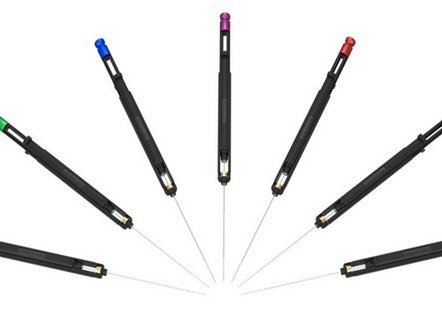
Smart SPME Fibers Collection

Key functionality of Smart SPME Fibers:

  • 7 different coating materials and film thickness 

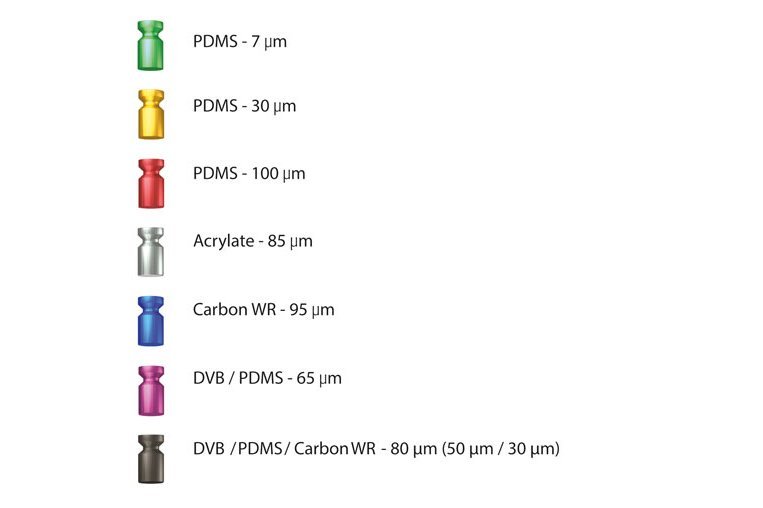
  • Color coded to indicate SPME Fiber coating and different film thicknesses

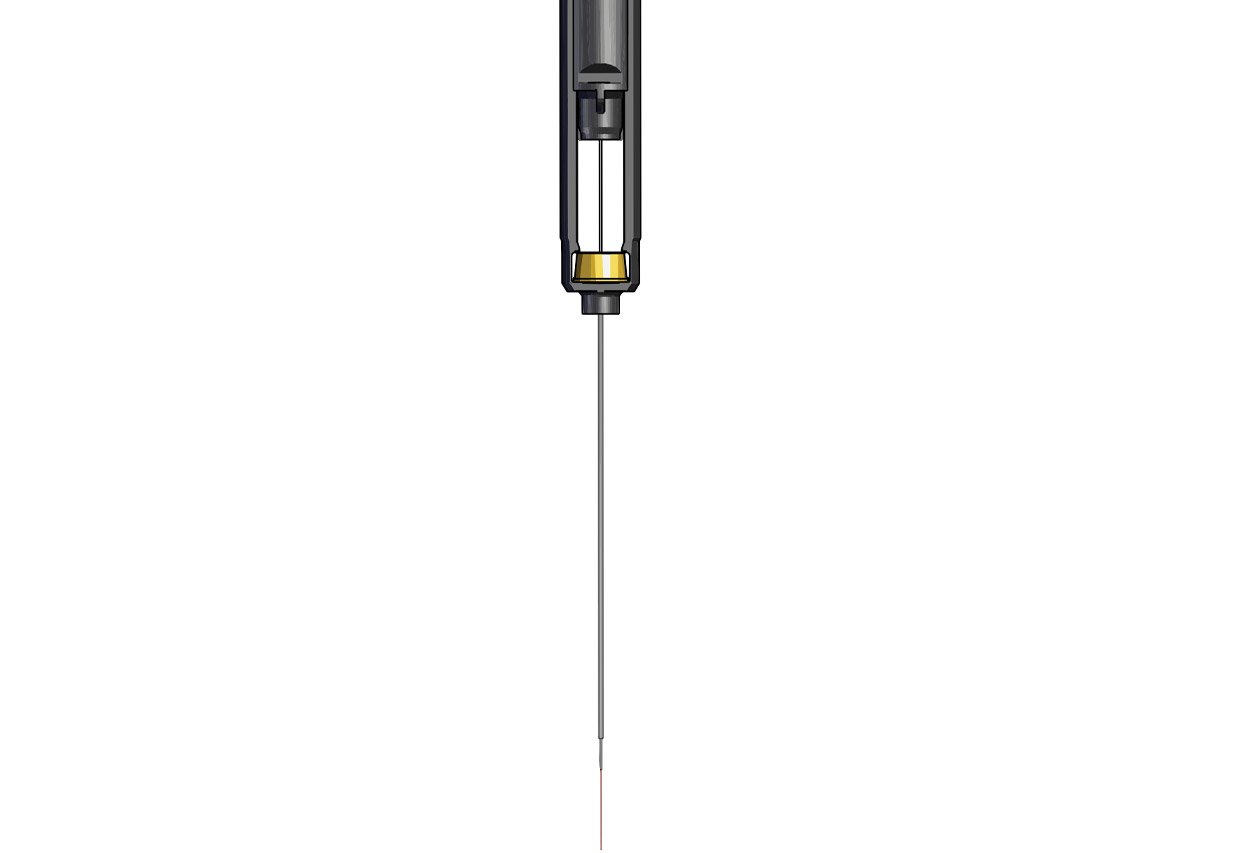
  • Integrated holder design facilitates installation and maintance


Smart SPME Fiber Close up

Benefits of Smart SPME Fibers:

  • Excellent extraction properties

  • Proven performance for many exiting standard methods

  • Designed for headspace sampling

  • Full traceability thanks to smart technology


SPME MultiGuide to upgrade to SPME Arrow Tool

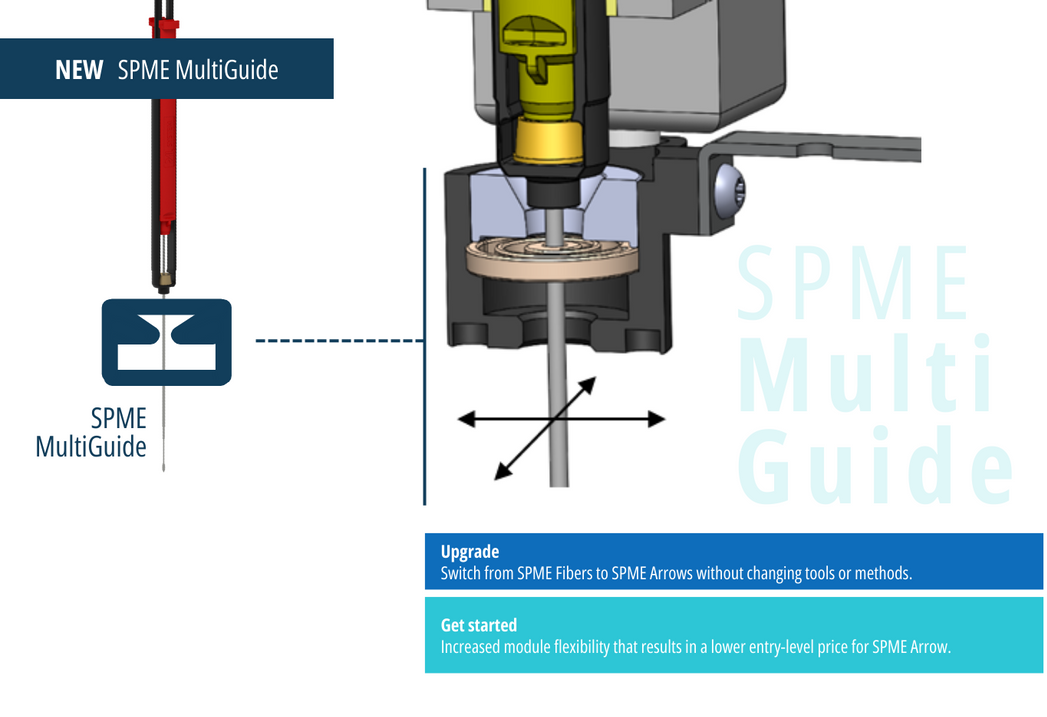
New: Introducing the SPME MultiGuide 

SPME Fiber Tools can now be upgraded for using 1.1 mm SPME Arrows. This is now possible using the SPME MultiGuide (PAL3-SPME-MG).
Installation of the SPME MultiGuide on a SPME Fiber Tool is simple, and compatible with all existing SPME methods on any generation of PAL3.

The SPME MultiGuide lowers the initial costs of a SPME Arrow drastically, making it accessible for more laboratories.


Smart SPME Fiber Selection Guide

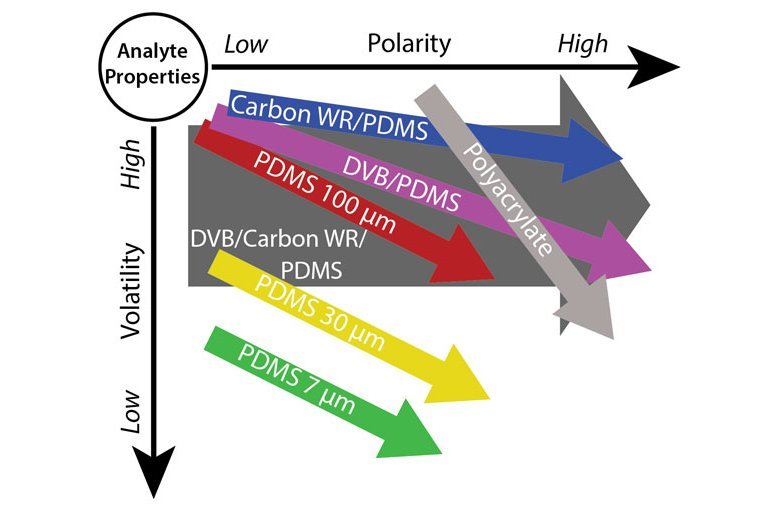
Smart SPME Fiber sorbent Selection Guide
Smart SPME Fiber Color code for sorbent and thickness

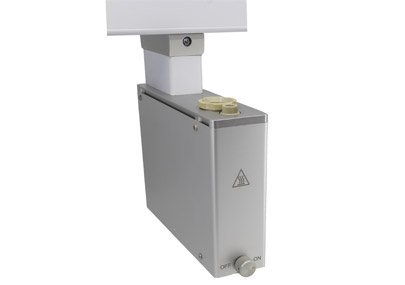
Detailed information on the specifications and handling of Smart SPME Fibers are available. For automation of SPME with the PAL RTC and PAL RSI a SPME Starter Kit is available, as well as an Agitator for agitation/sample enrichment at up to 200°C and a SPME Fiber Conditioning Module

The PAL Smart SPME Fibers are available in order quantities of one, three or five Smart SPME Fibers per box.
For method development, a set of each fiber type (set of five) is available.

PAL Smart SPME Fibers work with all the PAL3 Systems, however to use the smart capabilities (ID, traceability, usage history) the PAL3 Series II System is required.

Related Content

Optimizing the Preconcentration of Volatile PFAS Precursors - A Comparative Study of SPME Geometries
Application Notes
Optimizing the Preconcentration of Volatile PFAS Precursors - A Comparative Study of SPME Geometries

Optimizing the Preconcentration of Volatile PFAS Precursors - A Comparative Study of SPME Geometries

This Application Note summarizes a study by Williams et al. (2025) that performs a comprehensive comparison of two Solid Phase Microextraction (SPME) geometries: the traditional SPME Fiber and the robust SPME Arrow. The study systematically evaluates the impact of SPME geometry and extraction mode (Headspace vs. Direct Immersion) on extraction efficiency. The results provide a clear, data-driven basis for method development, showing how SPME configurations can be optimized for the specific physicochemical properties of different PFAS analytes.

PFAS in Cosmetics -A Comparative Analysis of Sample Preparation Techniques for PFAS Analysis
Application Notes
PFAS in Cosmetics -A Comparative Analysis of Sample Preparation Techniques for PFAS Analysis

PFAS in Cosmetics -A Comparative Analysis of Sample Preparation Techniques for PFAS Analysis

This application note explores a comparative study that tackles this challenge head-on by evaluating two powerful sample preparation techniques: Solid Phase Microextraction (SPME) and Micro Solid Phase Extraction (µSPE) for analyzing eight key PFAS in mascara by Liquid Chromatography with Mass Spectrometry (LC/MS). The investigation revealed that the two methods offer complementary strengths. SPME proved more sensitive for water-soluble PFAS and offered a simpler, filtration-free workflow. In contrast, automated µSPE excelled for oil-soluble PFAS but required a sample filtration step.

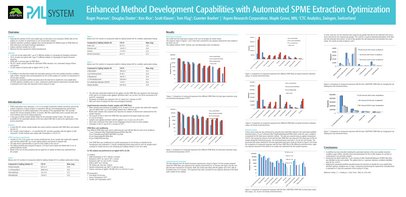
Enhanced Method Development Capabilities with Automated SPME Extraction Optimization
Posters
Enhanced Method Development Capabilities with Automated SPME Extraction Optimization

Enhanced Method Development Capabilities with Automated SPME Extraction Optimization

A workflow is described that enables the automated selection of the most suitable extraction conditions (type of fiber, extraction time and temperature) for the GC/MS analysis of a number of contaminants in oil and water samples.

Solid Phase Extraction Webinar
Webinars
Solid Phase Microextraction (SPME) - How does it work for my samples?

Solid Phase Microextraction (SPME) - How does it work for my samples?


This webinar offers a close insight into the operation and latest developments of automated SPME for VOCs and SVOCs by headspace, direct immersion and derivatization techniques. Key applications for food, water, environmental and forensic samples for use in every laboratory for GC/MS and LC/MS, also direct MS analysis are discussed.

Presented by:
Hans-Joachim Huebschmann, PhD

Flavor and Off-Flavour Analysis using Solid Phase Extraction webinar
Webinars
Flavor and Off-Flavor Analysis using Solid Phase Microextraction

Flavor and Off-Flavor Analysis using Solid Phase Microextraction

Solid Phase Micro Extraction (SPME) is widely used for chemical analysis of foods, beverages and food contact materials. As an automated technique, the SPME applications are selected for their simplicity, throughput and extraction efficiency.  As a solvent-free extraction, it is gains even more importance today as a green analytic technique. Besides the traditional SPME Fiber, the new SPME Arrow is enhancing trace level sensitivity at high mechanical robustness. With these features, this presentation will give insight on SPME analysis in coffee, wine and off-flavors. 

Presented by:

Erich Leitner, Graz University of Technology Institute of Analytical Chemistry and Food Chemistry

Stefan Cretnik, PhD, Product Manager, CTC Analytics AG

Sample Preparation Compendium
eBooks

Sample Preparation Compendium

Automated, Green, and Efficient
A Compendium on Micromethods in Analytical Sample Preparation

Discover robust, precise, and reliable analytical methods while following the principles of Green Analytical Chemistry in various fields such as Food & Food Safety, Environmental, Clinical, Life Science, and Chemical.

How to install the SPME MultiGuide in SPME Fiber Tools

SPME MultiGuide
Flyer

SPME MultiGuide

Easily switch form SPME Fiber to SPME Arrow without changing the Tool.

PAL3 Accessories & Smart Consumables
Brochures
PAL3 Accessories & Smart Consumables

PAL3 Accessories & Smart Consumables

Discover our Toolbox

PAL Smart SPME Fiber
Brochures

PAL Smart SPME Fiber

Optimized for Automation

Smart SPME Fiber Collection
Care & User (handling) Guides

PAL Smart SPME Fiber

General Information for PAL Smart SPME Fibers

SPME Arrow Conditioning Module
Manuals

PAL SPME Fiber Conditioning Module

Edition 5

Contact Request a quote