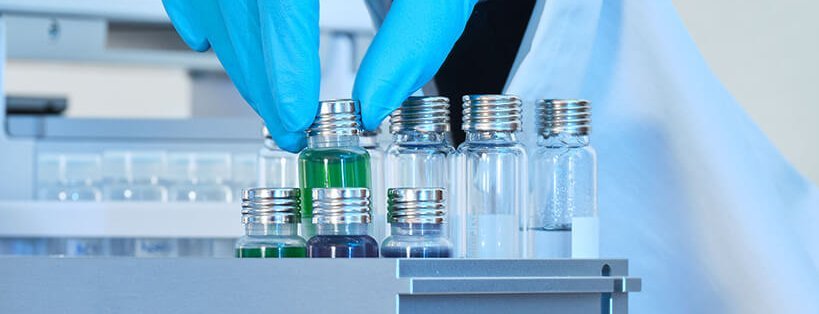

PAL System为食品安全、环境、生命科学和临
床实验室的常规工作提供自动化样品样品前处
理工作流程的解决方案。这些解决方案是与领
先的分析仪器制造商以及专业的解决方案供应
商一起开发并推向市场的。
Automating your sample preparation with the PAL System addresses the most common challenges in the analytical lab. Key benefits include:
Higher Throughput: Maximizes instrument uptime with unattended, 24/7 operation.
Improved Data Quality: Reduces manual errors, leading to greater precision, reproducibility, and more reliable results.
Enhanced Lab Safety: Minimizes human exposure to hazardous solvents and chemicals.
Full Traceability: Every step in the process is electronically logged, ensuring a complete and auditable sample history.
The PAL System is a robotic platform for automated sample preparation in analytical laboratories. With a modular "Tool Box" design and over 70,000 installations worldwide, it is a highly flexible and reliable solution that can be configured for simple injections or complete, complex workflows for chromatography and mass spectrometry.
When selecting an automation platform, it's crucial to look beyond your immediate needs.
Key considerations include:
CTC Analytics AG is the Swiss company that has been developing and manufacturing the PAL System since 1985. "PAL System" (Prep and Load System) is the globally recognized brand name for the sample handling platform, and PAL is a registered trademark of CTC Analytics AG.
The PAL System is available in three main configurations (in various sizes) to match different laboratory needs for throughput and workflow complexity:
PAL RSI (Robotic Sample Injection): A robust and cost-effective solution for reliable automated injections and basic sample preparation. It is the ideal starting point for automation and can be upgraded.
PAL RTC (Robotic Tool Change): This model offers greater flexibility and productivity by automatically changing tools (e.g., different syringes, extraction tools). This enables complex, multi-step workflows to run unattended 24/7.
PAL DHR (Dual Head Robotic): The most productive model, featuring two independent robotic heads. It can perform two workflows simultaneously, doubling the throughput for high-demand applications like LC/MS multiplexing.
PAL Systems are available through a global network of certified OEM partners and value-added resellers (explore our Distribution Network). These partners often sell the PAL System as an integrated front-end solution for their analytical instruments (e.g., GC/MS, LC/MS).
To find the ideal configuration for your laboratory, we recommend using our PAL Product Finder.
For purchasing inquiries or to discuss a potential collaboration, please contact us through our website or learn more about how to become a partner.
LC/MS Multiplexing is a powerful strategy to maximize the productivity of a mass spectrometer. By connecting a single MS to two or more LC systems, the PAL System can manage staggered injections so that the MS is constantly analyzing samples instead of waiting for a column to finish its run and equilibrate. This approach can double or even triple your sample throughput without the cost of an additional mass spectrometer.
While static headspace analysis samples a fixed equilibrium volume of gas, Dynamic Headspace (DHS) is an exhaustive extraction technique that provides superior enrichment for trace-level analysis. The automated In-Tube Extraction (ITEX) process involves:
Purging & Trapping: The sample is heated while an inert gas repeatedly purges the headspace. This gas flow carries the volatile compounds through a microtrap filled with a specific adsorbent material, which captures and concentrates the target analytes.
Thermal Desorption: The trap is then rapidly heated, releasing the concentrated analytes as a sharp band into the GC/MS for analysis. This dynamic process allows for much lower detection limits, making it the ideal technique for demanding applications like trace VOCs analysis in environmental samples or the analysis of additives in plastics.
Solid phase microextraction (SPME) is a solvent-free technique where a fiber coated with an extraction phase is used to isolate analytes. The PAL System automates SPME in two primary modes:
Headspace SPME: The fiber is exposed to the vapor phase above a liquid or solid sample, making it ideal for the analysis of volatile and semi-volatile organic compounds (VOCs analysis).
Immersion SPME: The fiber is dipped directly into a liquid sample to extract less volatile or non-volatile analytes.
While traditional SPME fibers are effective, the newer, more robust SPME Arrow offers superior performance. Its unique design combines a much larger surface area and volume of extraction phase with a robust metal core and piercing head, resulting in higher sensitivity, faster extractions, and a significantly longer lifetime. Learn more about the PAL System's SPME capabilities.
µSPE, or Micro SPE, is a miniaturized and automated Solid Phase Extraction technique that uses Micro SPE Cartridges and operates in two primary modes for highly efficient sample preparation:
Pass-Through Cleanup: In this mode, the sample extract is passed through the cartridge. The sorbent is chosen to retain matrix interferences while allowing the analytes of interest to pass through for collection and analysis. This is a common approach for cleaning up complex extracts, such as in QuEChERS workflows.
Bind-and-Elute (Enrichment): Here, the sorbent is selected to bind and retain the target analytes while the sample matrix is washed away. The purified analytes are then eluted using a small volume of a different solvent. This mode is ideal for analyte enrichment and fractionation.
The versatility of µSPE, determined by the cartridge chemistry, enables a wide range of applications, from general cleanup to targeted analysis like PFAS analysis using weak anion exchange (WAX) cartridges, or fractionation in metabolomics analysis. Key advantages are minimized solvent use, cleaner extracts without sample dilution, and improved data quality, leading to higher instrument uptime.
For volatile organic compounds (VOCs analysis), several automated sample preparation techniques can be applied depending on matrix complexity and required detection limits:
Headspace analysis: Ideal for routine gas-phase sampling above liquid or solid matrices.
Dynamic headspace: Uses continuous gas purging through an ITEX microtrap to concentrate trace-level volatiles.
SPME Arrow: Solvent-free sorptive extraction techniques offering superior sensitivity for trace organic pollutants in environmental samples.
Testing for Per- and Polyfluoroalkyl Substances (PFAS) in drinking water, surface water, and wastewater requires trace-level precision and strict background contamination controls. Regulated protocols like EPA 1633 or EPA 537.1 rely on Solid Phase Extraction (SPE) or Micro-SPE coupled with LC-MS/MS.
The PAL System provides dedicated hardware configurations for pfas analysis, executing extraction, cleanup (using WAX cartridges), and sample enrichment directly on the rail. To ensure accurate results at parts-per-trillion (ppt) levels, workflows designed for testing pfas in drinking water utilize fluoropolymer-free fluidics and wash stations to prevent ambient background interference and sample carryover.
The PAL System is an essential tool for high-throughput life science research.
For Proteomics analysis: It automates labor-intensive and error-prone steps such as protein digestion, post-digestion peptide cleanup (e.g., µSPE), and precise injection into the LC/MS, ensuring the high degree of reproducibility required for comparative studies.
For Metabolomics analysis: It provides robust automation of extraction procedures (e.g., Bligh & Dyer for polar and non-polar metabolites), derivatization for GC/MS analysis, and highly precise injections, which are critical for detecting subtle metabolic changes between sample groups.
The PAL System provides robust, automated workflows for the analysis of various hydrocarbon contaminants:
For PAH analysis: In complex matrices for environmental and food safety applications, the system automates the necessary extraction, cleanup (e.g., µSPE), and injection steps. This ensures the high recovery and reproducibility critical for reliable PAH testing at trace levels.
For MOSH/MOAH analysis: The determination of Mineral Oil Saturated Hydrocarbons (MOSH) and Mineral Oil Aromatic Hydrocarbons (MOAH) is a significant challenge, particularly in food analysis. The PAL System automates the complex sample preparation, including online LC-GC coupling, to effectively fractionate the two classes and remove interferences. This high level of automation provides the reproducibility needed for reliable quantification.
Yes, the PAL System excels at the automated sample preparation for FAME. It automates the entire transesterification process for Fatty Acid Methyl Esters, including the precise addition of reagents for saponification and methylation, liquid-liquid extraction, and final injection into the GC. This not only improves the reproducibility and throughput of FAME analysis but also enhances lab safety by minimizing manual handling of hazardous reagents like BF3-methanol during FAME derivatization.
The PAL System provides a complete, automated solution for trace-level PFAS analysis, addressing the critical challenge of background contamination. To ensure the lowest detection limits, a dedicated range of PFAS-free consumables (syringes, tubing, vials) is available. The system's flexibility allows it to automate a variety of extraction and cleanup techniques, including online SPE, Micro SPE (µSPE), and SPME. This versatility enables reliable and reproducible results across a wide range of matrices such as food, food contact materials, and environmental samples. The PAL System is capable of automating complex, regulated workflows like EPA 1633, making it an ideal platform for applications like testing PFAS in drinking water.
PAL System software options, e.g., Chronos or the PAL Method Composer, use overlapping dynamic scheduling to optimize sample timing. While the GC/MS or LC/MS instrument actively analyzes Sample A, the system prepares Sample B in parallel (e.g., executing dilution, FAME derivatization, or extraction). The next sample is ready for injection the instant the analytical run finishes, eliminating idle time during overnight operations. This effectively removes batch effects and keeps the MS running continuously.
High-Throughput Screening (HTS) is an automated testing strategy that allows scientific laboratories to rapidly screen and evaluate thousands of chemical compounds, biological samples, or clinical assays in a short period. HTS relies heavily on robotics, automated liquid handling, and software scheduling to execute parallel processing without manual bottlenecks.
The PAL System supports high-throughput screening by integrating multi-well plate handling, Robotic Tool Change (RTC), and LC/MS Multiplexing. Multi-head configurations can perform sample preparation steps simultaneously or manage staggered injections across multiple LC/MS systems, maximizing instrument uptime during continuous 24/7 operation.
PAL SMART Consumables, such as SMART Syringes, SPME Fibers, and SPME Arrows, feature an embedded chip that stores key information (e.g., part number, volume, usage history). When used with a PAL3 Series II system, this provides:
Full Traceability: Automatically logs the exact consumable used for each sample, ensuring a complete and auditable history.
Error-Free Operation: The system automatically recognizes the tool and its parameters, preventing mistakes.
Optimized Uptime: Tracks the usage of each consumable and alerts the user when it's time for replacement, preventing unexpected failures during a run. This "Smart" technology enhances process safety, increases result confidence, and lowers the overall cost of ownership.
The PAL System is designed for seamless integration and is controlled directly from all major Chromatography Data Systems (CDS) from vendors like Agilent, Bruker, SCIEX, Shimadzu, Thermo Fisher Scientific, and Waters. This allows for a single point of control for the entire analytical workflow.
To facilitate the creation of custom automation methods within these CDS environments, we offer the PAL Method Composer. This intuitive, graphical tool allows users to build complex workflows simply by dragging and dropping individual steps, without the need for programming.
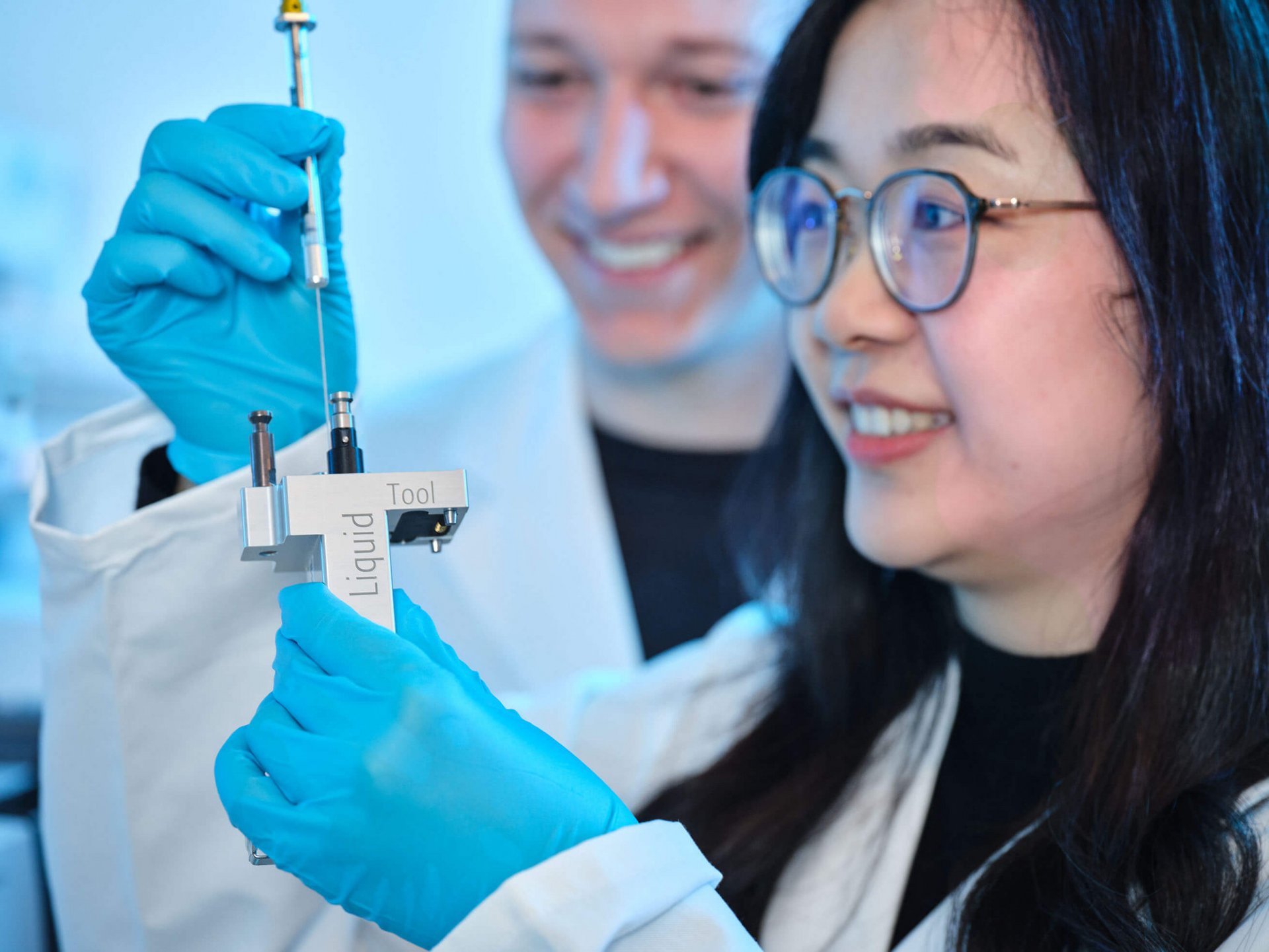
The PAL Pipette Tool LLD FT enhances standard automated liquid handling by combining air-displacement pipetting with smart sensing and mechanical tube handling:
Liquid Level Detection (LLD) --> Actively senses the surface height of liquids in open vials or tubes. This eliminates fixed-depth aspiration errors, prevents tip submersion contamination, and manages samples with fluctuating fill volumes or variable surface tension.
FlipTube (FT) Automation --> Uses mechanical pins to open and close FlipTubes, paired with a vacuum suction cup for secure tube transport to on-board modules like the Vortex Mixer (operating at up to 2000rpm).
Evaporation-Free Workflows --> Mechanically sealing tubes immediately after reagent dispensing creates a closed-loop environment that prevents volatile solvent evaporation during multi-step prep.
To perform an automated serial dilution on the PAL System:
Method Configuration --> Define the dilution factor, starting concentration, diluent volume, and mixing parameters using the PAL Method Composer or your preferred Chromatography Data System (CDS).
Robotic Liquid Handling --> The robotic head picks up a dedicated liquid tool, dispenses precise diluent volumes into target vials, and transfers the exact stock aliquot into the first dilution step.
Automated Mixing --> The vial is placed into an integrated vortexer or agitator module to achieve homogeneous mixing before transferring the aliquot to the next step.
Direct Injection --> Once the calibration series is prepared, the PAL System delivers the standards directly to the analytical instrument without manual handling.
A serial dilution is a stepwise, sequential dilution of a substance in solution, where the concentration decreases by a constant factor at each step. It is commonly used to construct standard calibration curves, prepare concentration series for bioassays, or bring high-concentration samples within an instrument's dynamic range.
Executing this manually is repetitive and prone to volumetric errors. Implementing automated sample preparation for serial dilutions replaces manual pipetting with high-precision robotic liquid handling. The system dispenses diluent, transfers precise aliquots from vial to vial across standard trays or microplates, and activates integrated vortex mixers between steps to guarantee thorough mixing. This yields linear calibration curves (R2 > 0.999), minimizes human error, and conserves valuable reagents.
To prevent cross-contamination in sensitive trace applications (such as PAH Analysis or PAH testing), the PAL System utilizes active wash stations and customizable rinse protocols. Syringes and fluidic lines can be washed with multiple solvents before and after sample transfers. For demanding workflows, Robotic Tool Change (RTC) enables the system to switch between separate, dedicated liquid handling tools for different steps, maintaining complete analytical isolation.
Automation directly enhances environmental sustainability by improving process efficiency and minimizing lab waste:
Plastic Waste Reduction: Automated liquid handling using reusable smart syringes with automated washing stations drastically reduces disposable plastic pipette tip consumption compared to manual processing.
Metric Scores: In formal AGREEprep (Analytical Greenness Metric for Sample Preparation) evaluations, transitioning from manual to PAL RTC-assisted sample prep improves overall greenness scores by eliminating single-use plastic waste and lowering operator exposure hazards.
Right-First-Time Efficiency: Eliminating manual pipetting errors yields calibration curves (R2 > 0.9992) and repeatability (RSD < 5%), preventing costly sample re-runs, solvent waste, and unnecessary instrument energy usage.